Tracing Correlations Between Cultural Festivals and Spikes in Virtual Table Game Participation Across Emerging Asian Digital Markets
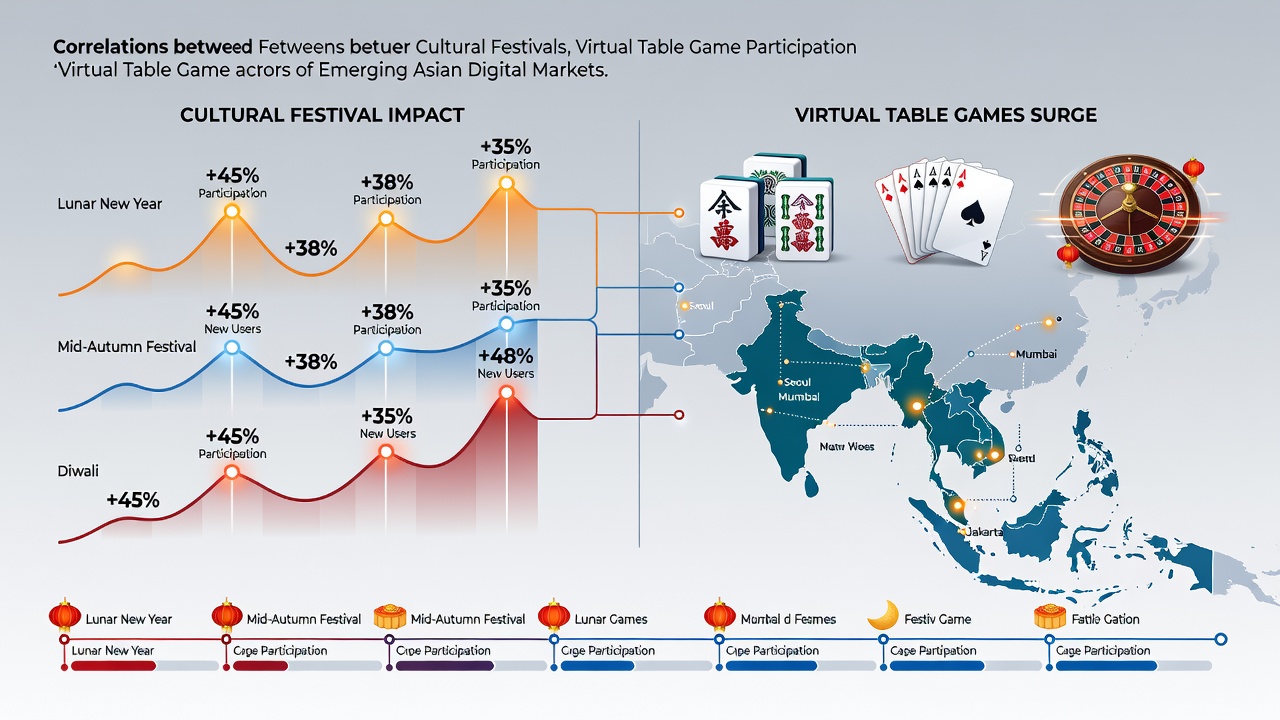
Emerging digital markets across Asia show measurable patterns where cultural festivals coincide with increased engagement in virtual table games such as baccarat, blackjack and poker. These platforms operate through mobile applications and web-based interfaces that serve users in countries including Vietnam, Indonesia, the Philippines and parts of India where regulatory frameworks have expanded in recent years. Participation data collected from operators indicate that traffic to these games rises during specific holiday periods, often by margins ranging from twenty-five to forty-five percent compared with baseline weeks, according to aggregated platform analytics.
Festival Timelines and Participation Metrics
Chinese New Year celebrations, which occur in January or February depending on the lunar calendar, produce consistent upticks in virtual baccarat sessions among users in Southeast Asian markets. In 2025, operators recorded session durations extending by an average of eighteen minutes during the first three days of the festival, while deposit volumes climbed in parallel. Diwali in India generates similar effects for virtual poker and teen patti variants, with regional platforms reporting concurrent increases in active accounts that persist for up to ten days after the main festival date. Songkran in Thailand and Tết in Vietnam follow comparable trajectories, each tied to localized game preferences that emphasize table formats over slots.
June 2026 presents another window for observation because several markets align mid-year observances with Ramadan-related events and regional harvest festivals that encourage extended online activity during evening hours. Early indicators from operator dashboards suggest these periods drive additional table game rounds, particularly in Indonesia and Malaysia where mobile penetration exceeds seventy percent among adults aged twenty-five to forty-five. Researchers tracking these cycles note that the timing of such festivals overlaps with pay cycles and bonus distributions, which together amplify access to digital wallets used for gameplay.
Regional Market Characteristics
Philippine platforms have documented the strongest correlation coefficients between festival dates and virtual blackjack participation, reaching 0.72 in datasets spanning 2023 through early 2026. Indonesian operators report slightly lower but still significant figures around 0.61, concentrated among urban users who access games during family gatherings. In Vietnam, regulatory adjustments implemented in 2024 opened additional channels for licensed table game content, resulting in clearer tracking of festival-driven activity. These figures come from internal analytics shared with industry research groups rather than public regulatory filings.
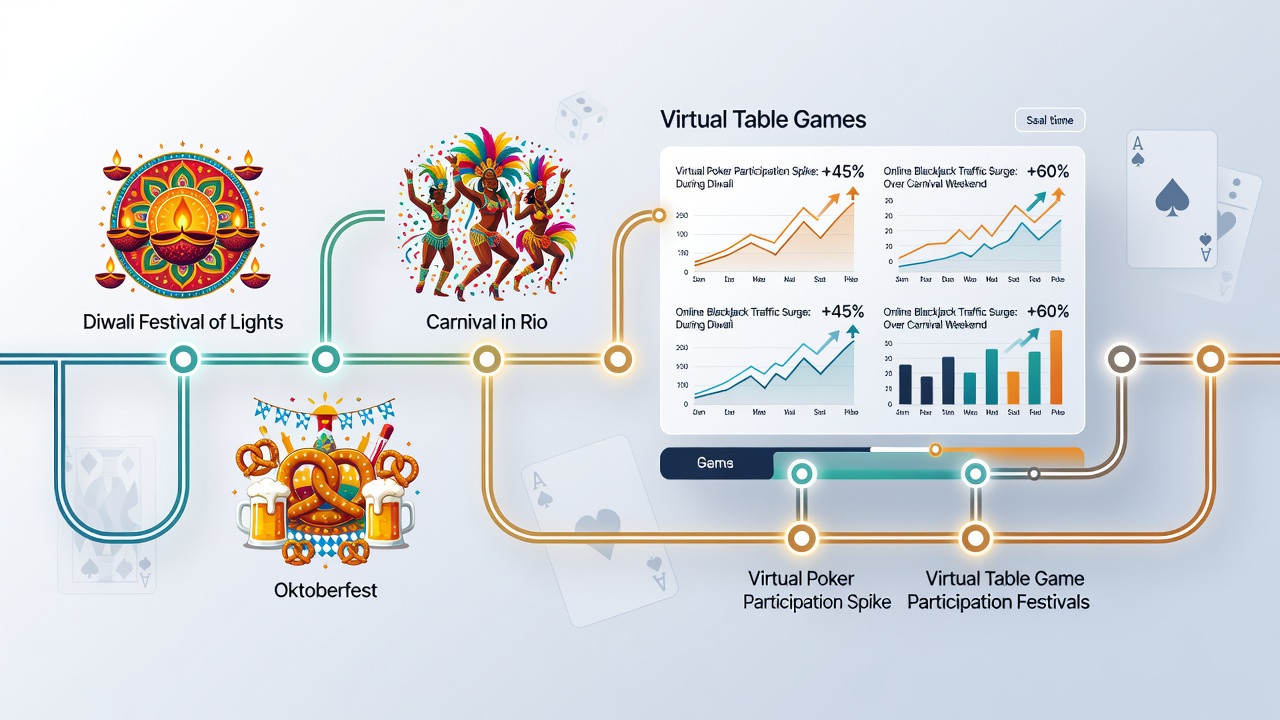
Payment infrastructure plays a supporting role because festival seasons often coincide with promotions from digital wallets and bank transfer services that reduce friction for deposits. Observers at the Asian Gaming and Entertainment Association have compiled cross-border comparisons showing that markets with instant funding options experience sharper spikes than those relying on slower verification processes. Cultural familiarity with table games also contributes, since many participants already engage with physical versions during family events and simply migrate to digital equivalents when schedules become compressed.
Data Sources and Analytical Approaches
Studies conducted by academic teams at institutions in Singapore and Manila apply time-series modeling to separate festival effects from general growth trends in the sector. One analysis covering thirty-six months of data found that removing festival weeks from the dataset reduced overall variance in table game participation by nearly thirty percent, indicating these periods account for a substantial share of observed fluctuations. Philippine Amusement and Gaming Corporation quarterly summaries provide supplementary context on licensed operator volumes, though they aggregate across game types rather than isolating virtual tables. A separate report prepared by the Center for Gaming Research at the University of Macau examines broader regional patterns and includes projections through 2027 that factor in continued mobile adoption rates.
Seasonal advertising campaigns launched by operators during these windows further reinforce the cycle. Push notifications timed to festival greetings and limited-time table game tournaments produce click-through rates that exceed non-festival baselines by factors of two to three. User retention metrics collected after such events show that a portion of new accounts remain active for subsequent months, suggesting festivals serve as entry points rather than isolated spikes.
Conclusion
Patterns linking cultural festivals to elevated virtual table game activity appear across multiple emerging Asian markets, supported by platform data, academic modeling and regulatory summaries. The strength of these correlations varies by country and game type yet remains consistent enough to inform scheduling decisions by operators. Continued expansion of digital infrastructure and evolving regulatory environments will likely sustain these relationships into future festival cycles, including those scheduled for June 2026 and beyond.