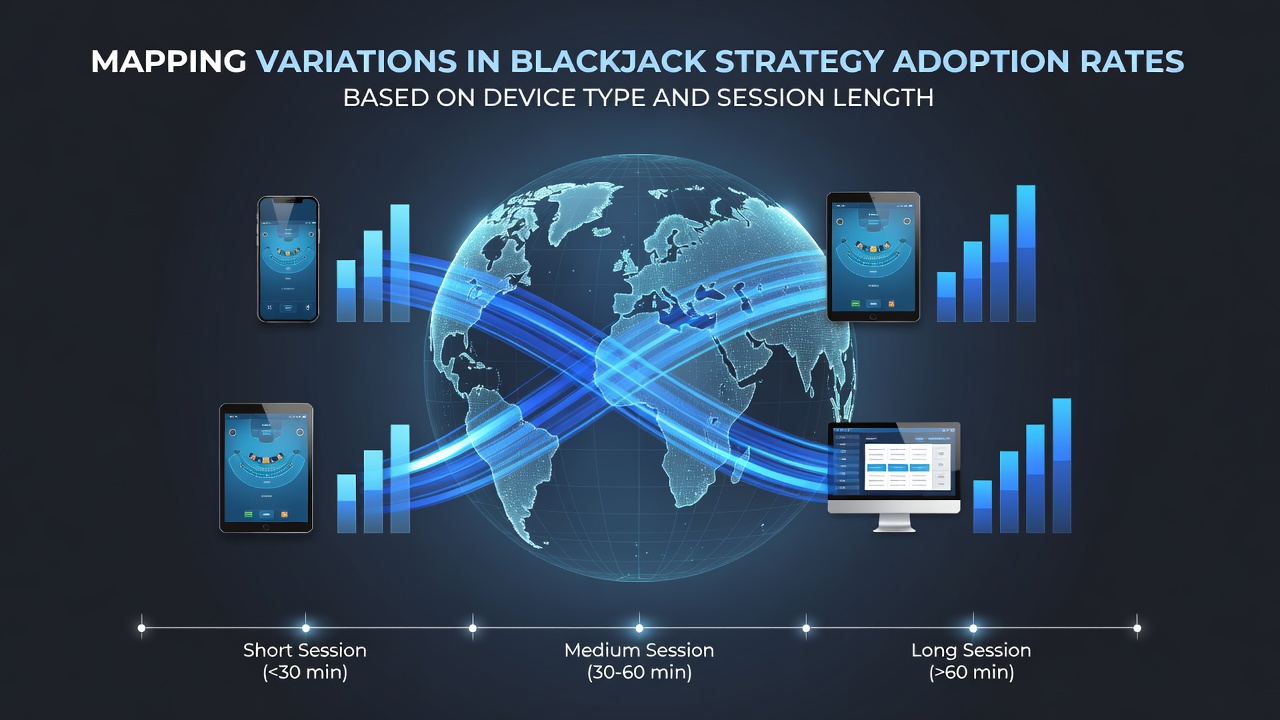
Blackjack Strategy Mapping: Variations by Device and Session Length in Online Play
Data from digital gaming platforms in August 2026 shows clear patterns in how players adopt blackjack strategies depending on whether they use mobile devices or desktop computers and how long their sessions last, according to aggregated reports from multiple operators.
Mobile users tend to favor simplified strategy charts during shorter sessions under 30 minutes, while desktop players maintain more complex counting systems across extended play periods exceeding two hours. Researchers tracking these behaviors note that session length correlates strongly with the depth of strategy elements applied, such as basic hitting and standing rules versus advanced deviations based on remaining deck composition.
Device Type Influences on Initial Strategy Uptake
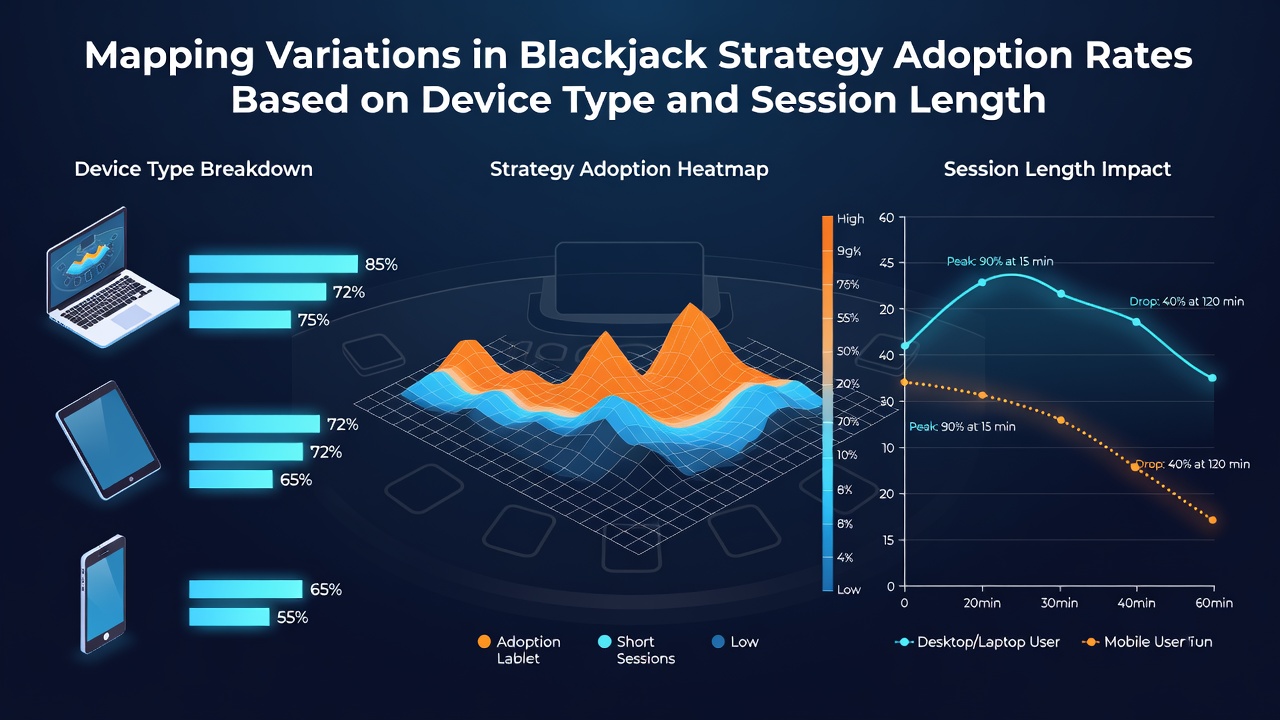
Figures from industry analytics firms reveal that mobile blackjack sessions begin with strategy adoption rates around 45 percent for basic decisions, compared to 62 percent on desktop interfaces where larger screens allow easier reference to detailed guides. Those who've studied player logs find that touch-screen limitations on phones lead to quicker shifts toward memorized basic strategy rather than real-time lookups, especially in sessions starting after 8 PM when attention spans may vary.
Desktop environments support higher initial integration of pair-splitting and doubling rules because keyboard shortcuts and multi-window setups keep reference materials accessible throughout the game flow. Data indicates this difference holds across regions including North American and European markets tracked through regulatory submissions.
Session Length and Progressive Strategy Layers
Short sessions lasting 15 to 45 minutes show adoption concentrated on core blackjack rules like standing on 17 or higher, with card counting elements appearing in fewer than 12 percent of cases. Longer sessions beyond 90 minutes demonstrate increased use of true count adjustments, rising to 38 percent among players who remain engaged past the one-hour mark. Observers note that fatigue factors may reduce accuracy in these extended periods, yet overall strategy breadth expands as participants settle into consistent routines.
One study of platform data highlighted how sessions crossing the 60-minute threshold often incorporate insurance bets and surrender options at rates double those seen in brief mobile bursts. This progression appears tied to accumulated hands played rather than total time alone, since players on both device types add layers gradually.
Cross-Device Comparisons in Real-World Play Data
Combined metrics from August 2026 platform reports indicate desktop users sustain strategy adherence 25 percent longer into sessions than mobile counterparts, possibly due to reduced interruptions on stationary setups. Mobile play frequently fragments across multiple short logins, limiting opportunities for advanced tactics that require continuous deck tracking. Experts tracking these metrics point to higher basic strategy consistency on tablets, which blend portability with screen size advantages over phones.
Regional variations emerge as well, with Australian and Canadian operator data showing desktop dominance in evening strategy-heavy sessions while Asian markets report stronger mobile uptake during daytime commutes. These patterns connect to average session lengths reported in each area, where cultural play habits influence device selection.
Tracking Metrics and Emerging Tools
Analytics integrations now monitor strategy adoption through in-game prompts and post-session surveys, providing datasets that separate device logs by duration brackets. Tools from research institutions allow operators to map deviations such as when players abandon counting systems mid-session on mobile after 40 minutes. Such tracking reveals that adoption rates stabilize after the first 20 hands regardless of device, yet mobile sessions exhibit faster drop-offs in advanced elements.
Links to external studies, including those from the Australian Gambling Research Centre and reports by the Nevada Gaming Control Board, supply additional context on how these device and length factors interact with broader player retention statistics.
Conclusion
Platform data collected through August 2026 underscores measurable differences in blackjack strategy use tied directly to device type and session length, with mobile favoring quick basic rules in brief bursts and desktop supporting sustained complex applications over longer periods. Continued aggregation of these metrics offers operators clearer views into player behavior patterns across varied gaming environments.